How can I calm the noise in me? Dive into the depths To a place under the noise. Under the noise You are still there. You have not left me alone. You are always with me. Your Spirit sits with my Spirit In the quiet and stillness Of my heart, Under the noise. That place that has been given to you Your throne room Where I meet with you– Where You meet with me. Under the noise.
It is a tale as old as time–the struggle between two ways of living in the world, and it is illustrated for us in the story of Cain and Abel in the Bible.
“In the course of time Cain brought an offering to the Lord from the fruit of the ground, while Abel, for his part, brought the fatty portion of the firstlings of his flock. The Lord looked with favor on Abel and his offering, but on Cain and his offering he did not look with favor. So Cain was very angry and dejected. Then the Lord said to Cain: Why are you angry? Why are you dejected? If you act rightly, you will be accepted; but if not, sin lies in wait at the door: its urge is for you, yet you can rule over it.”
Genesis 4:3-7
In 1940, George Orwell wroote a book review of Mein Kampf. The following is from the last paragraph:
And [Hitler] has grasped the falsity of the hedonistic attitude to life. Nearly all western thought since the last war, certainly all “progressive” thought, has assumed tacitly that human beings desire nothing beyond ease, security and avoidance of pain. In such a view of life there is no room, for instance, for patriotism and the military virtues. The Socialist who finds his children playing with soldiers is usually upset, but he is never able to think of a substitute for the tin soldiers; tin pacifists somehow won’t do. Hitler, because in his own joyless mind he feels it with exceptional strength, knows that human beings don’t only want comfort, safety, short working-hours, hygiene, birth-control and, in general, common sense; they also, at least intermittently, want struggle and self-sacrifice, not to mention drums, flags and loyalty-parades. However they may be as economic theories, Fascism and Nazism are psychologically far sounder than any hedonistic conception of life. The same is probably true of Stalin’s militarised version of Socialism. All three of the great dictators have enhanced their power by imposing intolerable burdens on their peoples. Whereas Socialism, and even capitalism in a more grudging way, have said to people “I offer you a good time,” Hitler has said to them “I offer you struggle, danger and death,” and as a result a whole nation flings itself at his feet.[1]
Hitler understood somehow that man has two parts. On the one hand that they want comfort, ease, and safety, and on the other, that they need to fight for and struggle toward something to find meaning.
Read any children’s book or watch any movie with a hero and you find this to be true. The hero cycles from comfort, to a desire for or even a push into adventure, climaxes with the “hero” being brought to the brink of death, and then concludes with the journey back home to comfort and safety with stories of glory to shared around the campfire or in a village pub.
Human beings keep telling these stories because they are fundamentally true. They tell them because their soul longs for meaning. But there is another part to humanity that wants to be the lord of their own lives and everything they survey.
When one focuses their attention on “cleaning their room”, one chooses to be like Abel. Through sacrifice in the short-term, one plans for the long-term, being concerned for the welfare of others and caring more about relationships than possessions. By critically examining oneself and removing the parts that are unloving, unkind, and selfish, one willingly takes on the struggle toward a more whole human being, free of vices and rich in virtues, and looking for that which is meaningful and eternal.
If one doesn’t employ the “scalpel” to oneself, one will turn it into a “sword” toward their neighbor as Cain did with his brother. One will look at what another has and think that they somehow deserve it. If one’s mindset is that they are entitled to another man’s land, money, or wife, they will have no problem stealing, killing, and destroying their neighbor to get that which they desire. One, who makes the “other” into a sacrifice on the altar of self-importance, becomes their own god; everyone is lesser than, a thing to serve their needs and desires. Violence is hurled at the outer world and replaces the personal growth through struggle in the inner world.
She picked up the stone she had been carrying in her pocket. It was smooth from rubbing with her fingers and cool to the touch. It was her favorite stone, the only stone she had left.
“Can I have it, little one?”
“Why, I don’t know that I could part with it. I love it so, you see. I found it a long time ago and I don’t remember life without it. What would I have in its place?”
“Ah, but you see, that is precisely why I want it. Perhaps you are meant to know what loss of a thing feels like. I will tell you this, If you give me the rock, I’ll give you more of me. And I’ll still have the rock, but I’m very good at keeping things safe.”
“Well…maybe.”
And then, looking into his deep brown eyes, she could see the love he had for her, how he wanted her trust in even this seemingly small thing, so she opened her hand and offered the last thing in the world she had to call her own.
And she immediately felt light, and free–like the world was so full of possibility. Like she had so many options for how to be in this world than she thought possible while holding on to that one thing she had cherished for so long.
She was starting from scratch; rediscovering herself and what life could possibly be in this rockless world. And instead of feeling dread over her loss, she just felt peace, a little apprehensive, but sure that she’d made the right decision, and that maybe when she was ready he would give back her rock and it would fit with her new life that she was setting out to discover.
But for now, she had given everything over to his care. Her faith was simple and small, and she felt good.
He held out his hand, and she clasped it tightly. They would be going on this adventure together. She would never be alone again.
From the fear that I am unlovable…
Deliver me, Jesus.
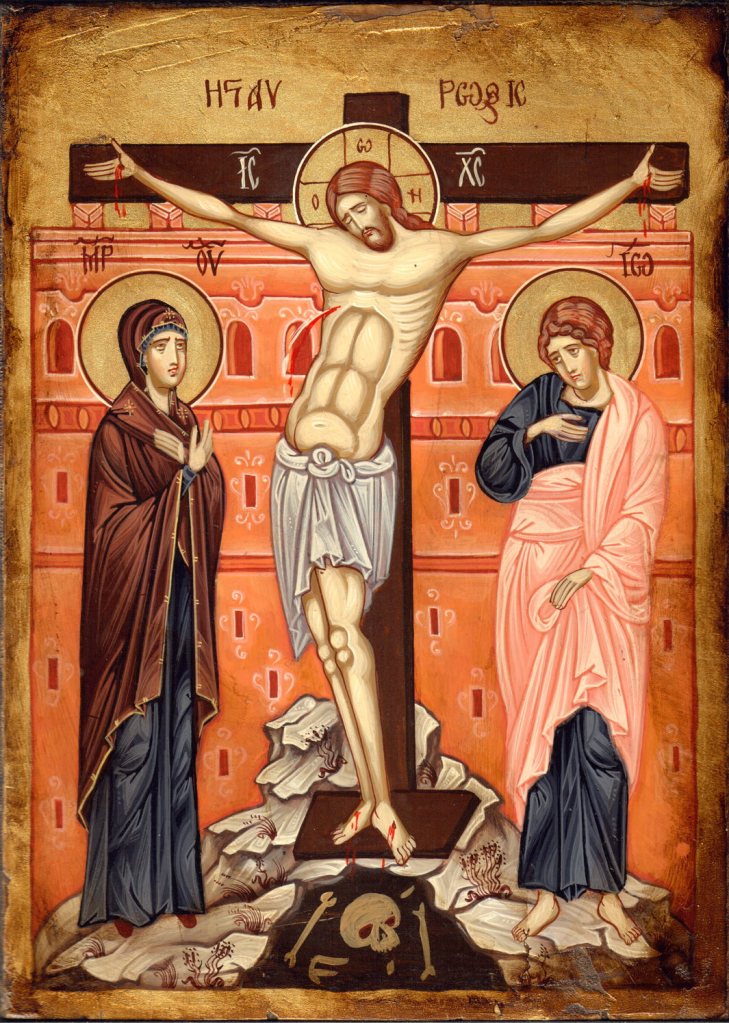
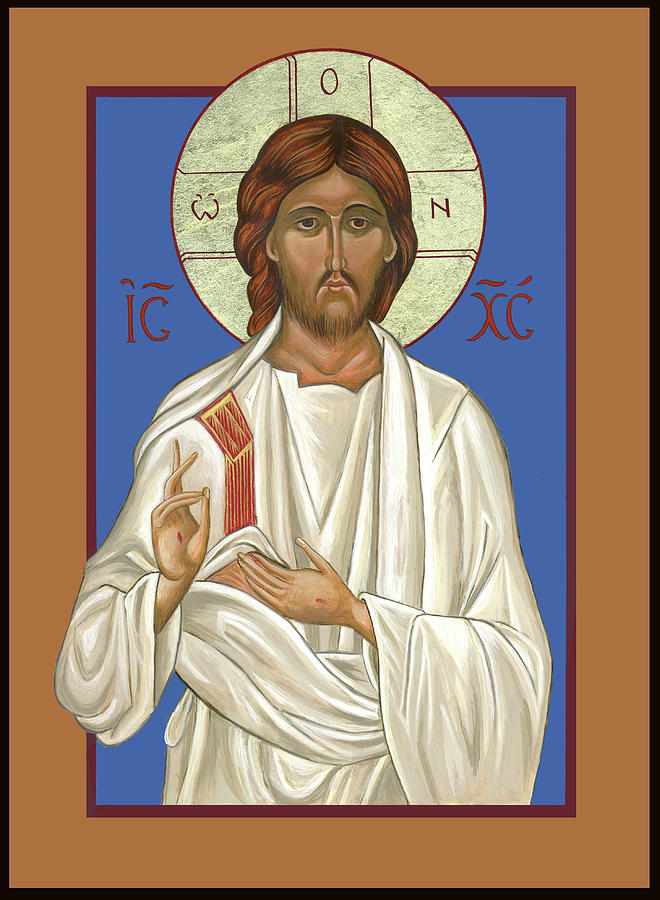
The idea that a person is unlovable goes back to the feeling that in order to be lovable we have to do and say the right things. Though it may be difficult sometimes for other people to love us, for God it is effortless. This is the beauty of the Gospel. God loves you; He loves me; He loves everyone. If you doubt that, you have only to look to the One who laid His life down for you on the cross–Jesus Christ, the Son of God who is fully God and fully man. He is the real, tangible proof that you are indeed lovable.
For God so loved the world that he gave his only Son, so that everyone who believes in him might not perish but might have eternal life. (John 3:16)
“Man’s maker was made man, that He, Ruler of the stars, might nurse at His mother’s breast; that the Bread might hunger, the Fountain thirst, the Light sleep, the Way be tired on its journey; that the Truth might be accused of false witness, the Teacher be beaten with whips, the Foundation be suspended on wood; that Strength might grow weak; that the Healer might be wounded; that Life might die.”
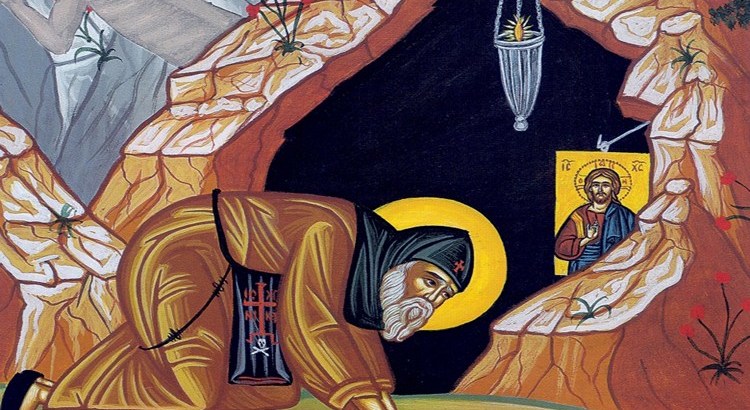
People often think that “be still” in this verse means, “be quiet,” but it actually means “sink down, relax, let drop, or let go” (H7503).
On the night Christ was betrayed, He prayed in the Garden of Gethsemane (Olive Pressing):
“Father, if you are willing, take this cup away from me; still, not my will but yours be done… He was in such agony and he prayed so fervently that his sweat became like drops of blood falling on the ground. ” (Luke 22:42,44)
In His humanness, Christ struggled with letting go of His own will, so much so that His sweat became as drops of blood. He humbled Himself, and acquiesced to His Father’s will even to the point of death.
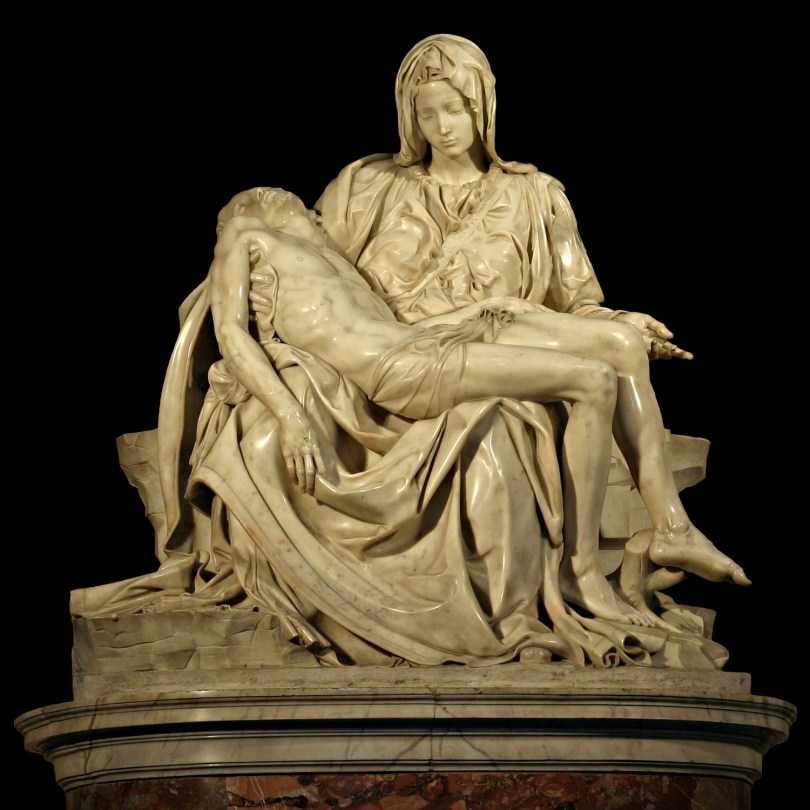
La Pietà by Michelangelo is a masterpiece revealing the beauty of the human form and evoking emotion from the onlooker. For me, it embodies the idea of letting go or surrender. In dying, Christ shows His complete surrender to the will of His Father. Yes, He died, but three days later, He rose from the dead, conquering death and the grave. In letting go, in being humble, He is raised up to the highest place of honor in His Father’s Kingdom.
Humble yourselves before the Lord and he will exalt you. James 4:10
Many people struggle with wanting their own way. We think that if we can control our lives, we can avoid pain, discomfort, annoyance, and other kinds of suffering. But this simply is not true. We can’t control what happens to us. We can only control how we confront what happens to us.
For whoever wishes to save his life will lose it, but whoever loses his life for my sake will save it. (Luke 9:24)
We cannot escape suffering. What we can do is let go of our need to try to control and put our trust in a God Who is good, Who loves us, and Who desires the best for us. We can surrender to His will because He is faithful, He is trustworthy.
For if we have grown into union with him through a death like his, we shall also be united with him in the resurrection. (Romans 6:5)
Even though we are destined to die, He has the power to raise us up again. We have hope that the death we die, whether physically or even psychologically, it is not the end; resurrection is coming.
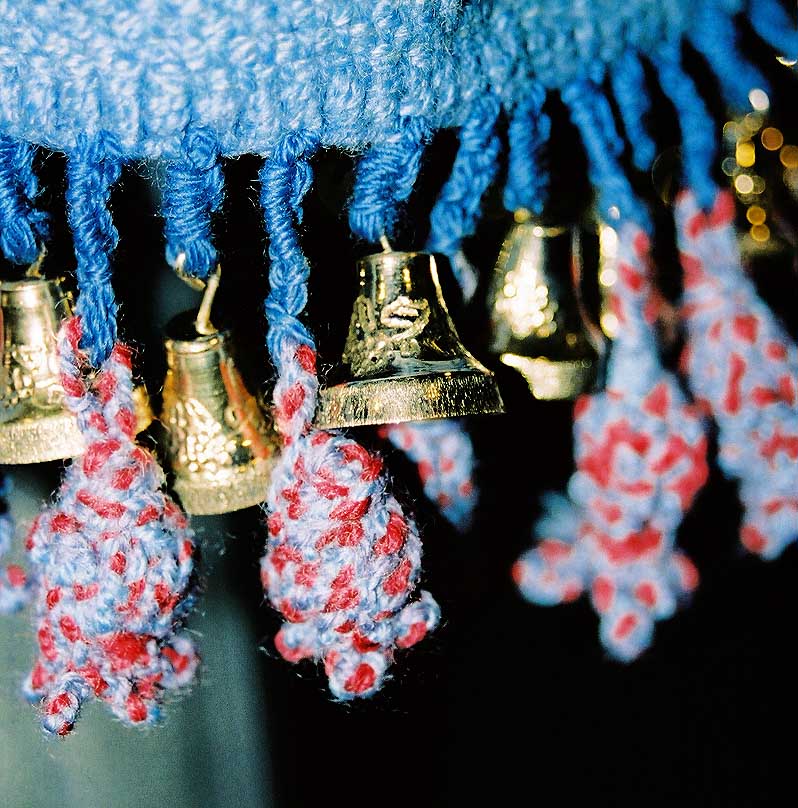
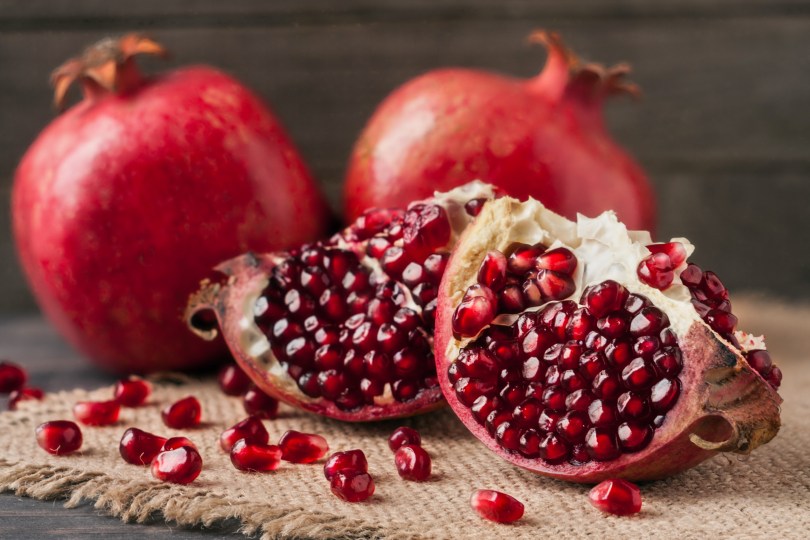
“The Lord was specific even about small details. Around the hem of the priests’ garments there were to be embroidered pomegranates of purple, blue, and red, interspersed with golden bells: “a golden bell and a pomegranate, a golden bell and a pomegranate, round about on the skirts of the robe” (Exod. 28:34). Even though the children of Israel were refugees, wandering in the desert and living in tents, God commanded Moses to use extravagant resources to make worship beautiful. All of it portable, too, so that an impoverished people could carry that beauty with them, as they crossed and recrossed the desert over the course of four decades. Beauty must mean something. God must know something about how beauty works on the human heart. He must have made us that way.”
“The golden bells alternating with the pomegranates represent the brilliance of good works. They are the two pursuits through which virtue is acquired, namely, faith toward the divine and conscience toward life. The great Paul adds these pomegranates and bells to Timothy’s garment, saying that he should have faith and a good conscience. So let […]



 A Bell and a Pomegranate