Christ is Born in You

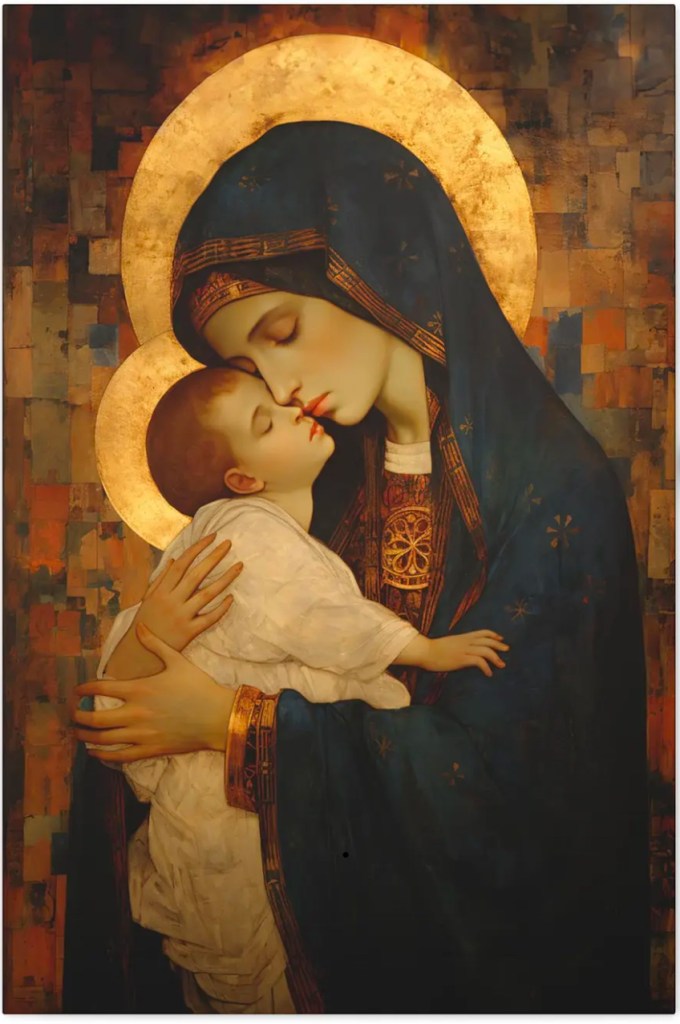
The celebration of the birth of the Christ child is also the celebration of the Christ child being born within all humanity. Each person who walks this earth has a little Christ who has been born or is waiting to be born. You may disagree, but I take Jesus’ words to heart when he said, “whatever you do to the least of these, you do unto me” (Matt. 25:40) —speaking of the Christ within him. And “unless a seed falls into the ground, and dies it remains a single seed, but if it dies it produces many seeds.” (John 12:24) Christ came in the form of an enlightened human babe named Jesus, he grew up, and then he died. The seed of the Word in His heart was planted in the hearts of all mankind on the day of his death (see the parable of the sower-Matt. 13:1-23). The resurrection of Christ happens in us, as well, whether it happened historically or not does not matter. What matters is what happens in us! 

Some have never known his Name, but they recognize the Light. Some have never seen his Light, but have heard his Word in the depths of their being. (John 1) Each in their own way responds to and awakens to the Christ within them and many have done glorious and wonderful things to bring the light of the Divine to humanity.

That’s my story, and I am sticking with it! A very Merry Christmas to you all.

You are so very loved.
Identity Crisis

Identity crises are caused when we are told that we must act a certain way or believe certain things. Conform or be cast out of the community. What happens when the cognitive dissonance is just too great to pretend anymore? We either get asked to leave, or we walk away.

This is the beginning of a death. A death of what we tried to embrace. A death of the relationships. A death of the dreams we had while still in that community. But this death is needed if we are to remember who we really are.

After death comes (re)birth. A (re)birth of wonder, curiosity, and fearlessness. The worst of it has passed, and joy and peace are to be found in the unknown, the places yet to be explored.

We were always meant to die before we could truly live. This is the mystery of the ages. That through one man death entered the world and through one man life was offered freely to all. For how could we know what is Life without first walking through the valley of death?

Judge Not the Tree

“You judge according to the flesh; I judge no one.” John 8:15

Dear Brothers and Sisters, Release yourself from the bondage of judgement–judgement of yourself and of others. The Father judges no one; the Son judges no one; the Spirit judges no one. Since we have been made in His likeness and image, we are also not meant to judge.

Judgement is fruit of the tree of knowledge of Good and Evil.

“A bad tree cannot bear good fruit, nor can a good tree bear bad fruit.”

You are a Tree of Life, so there is nothing left to do but Live.

Prodigal, Come Home

You are a new creation, He has made you brand new. You are who He says you are. And to Him you are beloved, you are precious, you are holy, you are righteous, you are blameless, you are enough. You don’t need to do anything to gain approval from Abba. He approved of you from the foundation of the world. You are the apple of His eye. You are the child He always wanted. You are beautiful, compassionate, tender-hearted, faithful, and kind. You are all these things because He made you so. He made you to be like Him, in His image and likeness. He declared that you are very good from the beginning. He is well pleased with you.

The Father is well pleased with you, and requires nothing of you but to rest in His love. You could never write another word, you could not give another penny, you could never keep another feast day, and He would love you just the same. He loves you, not because of the things you do or don’t do, but because He loves. Love does not live at the expense of others. Love is not self-serving. This is the premise from which we must read everything from Scripture, especially the words of Jesus. Jesus came to show us the Father’s love.

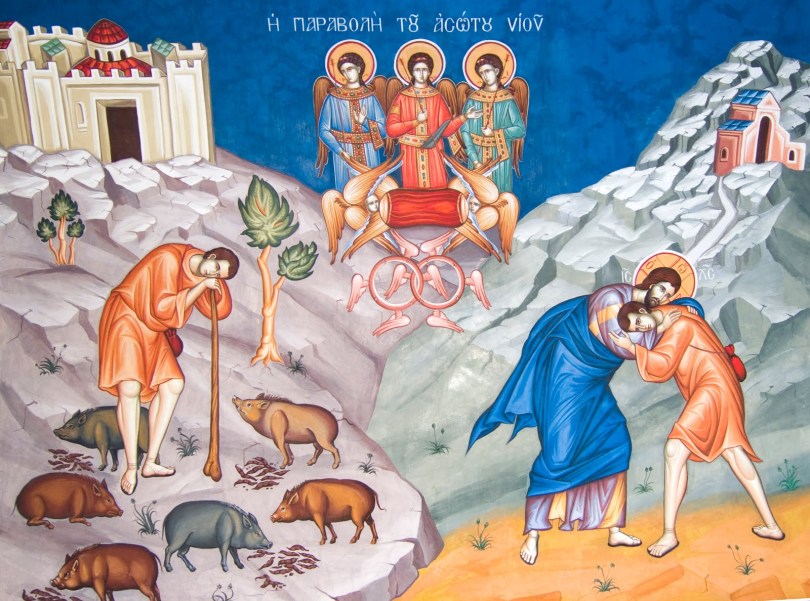
The Father much like the father in the prodigal son parable has been misunderstood. The Father of fathers, the best one of all, has been rejected by His sons. They have not seen His goodness, His unconditional love, His mercy, His generosity. Humanity has either gone away from Him and lived a hedonistic lifestyle or we’ve placed burdens on ourselves that He never required of us–seeing ourselves as no better than servants, when He has always loved us and seen us as sons. “My son you have always been with me and all I have is yours.”

This is a Father who loves and does not pick favorites. He has never withheld anything from the eldest son; the eldest son never considered himself worthy enough to ask. Do you see? It’s not how God perceives us, it’s how we’ve perceived ourselves–that was the dysfunction we got from Adam, a dysfunction that Jesus came to correct.

You are to die for! You are worth laying down His own life in order to show you the extent of His love. He has placed no other burden, no command but to Shema! Hear with your heart all the love He has for you; believe and be transformed in the renewing of your mind by this truth that He has said about you! Then you will be free to love as you have been loved–not the love that expects love in return, but love for its own sake.

Letting Go

child-hand-1206922_1280

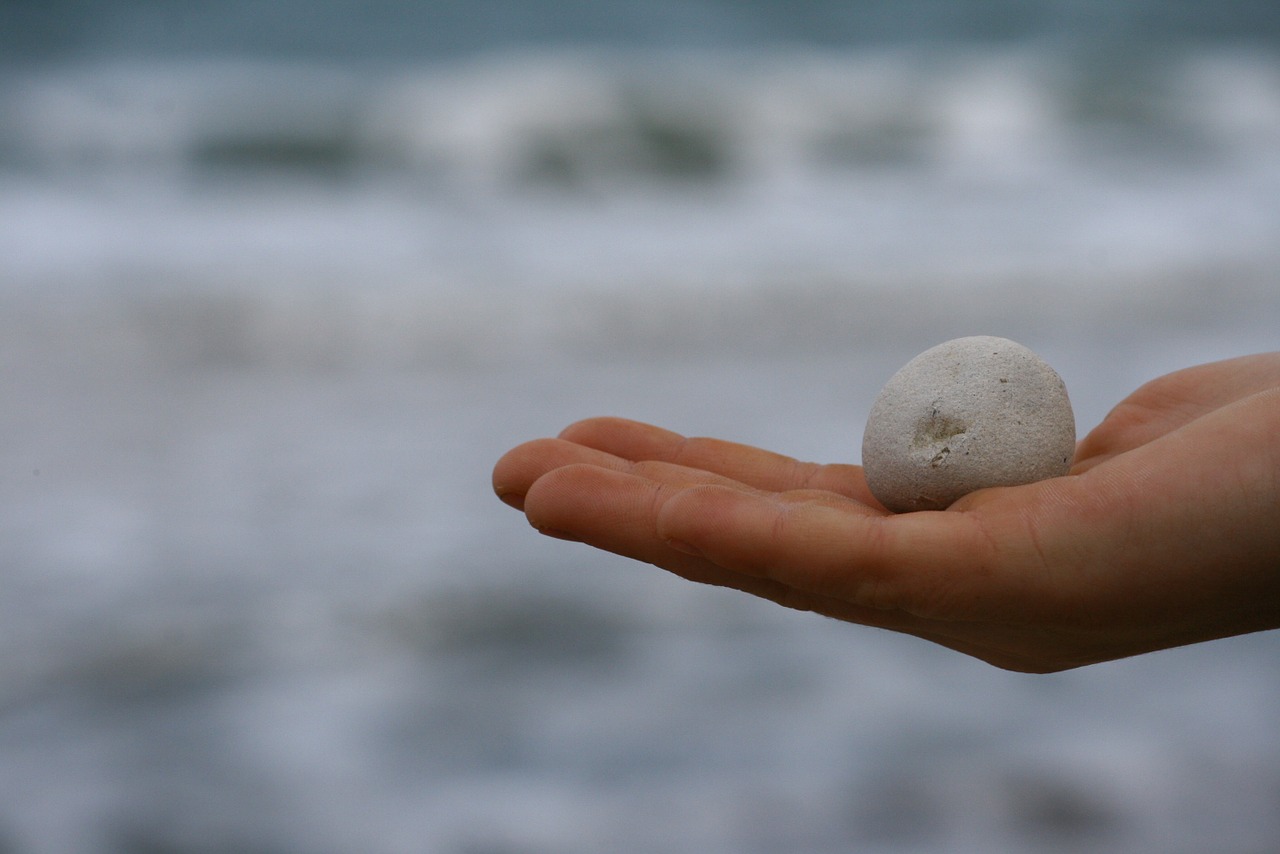
She picked up the stone she had been carrying in her pocket. It was smooth from rubbing with her fingers and cool to the touch. It was her favorite stone, the only stone she had left.

“Can I have it, little one?”

“Why, I don’t know that I could part with it. I love it so, you see. I found it a long time ago and I don’t remember life without it. What would I have in its place?”

“Ah, but you see, that is precisely why I want it. Perhaps you are meant to know what loss of a thing feels like. I will tell you this, If you give me the rock, I’ll give you more of me. And I’ll still have the rock, but I’m very good at keeping things safe.”

“Well…maybe.”

And then, looking into his deep brown eyes, she could see the love he had for her, how he wanted her trust in even this seemingly small thing, so she opened her hand and offered the last thing in the world she had to call her own.

And she immediately felt light, and free–like the world was so full of possibility. Like she had so many options for how to be in this world than she thought possible while holding on to that one thing she had cherished for so long.

She was starting from scratch; rediscovering herself and what life could possibly be in this rockless world. And instead of feeling dread over her loss, she just felt peace, a little apprehensive, but sure that she’d made the right decision, and that maybe when she was ready he would give back her rock and it would fit with her new life that she was setting out to discover.

But for now, she had given everything over to his care. Her faith was simple and small, and she felt good.

He held out his hand, and she clasped it tightly. They would be going on this adventure together. She would never be alone again.

You Are Lovable

From the fear that I am unlovable…
Deliver me, Jesus.

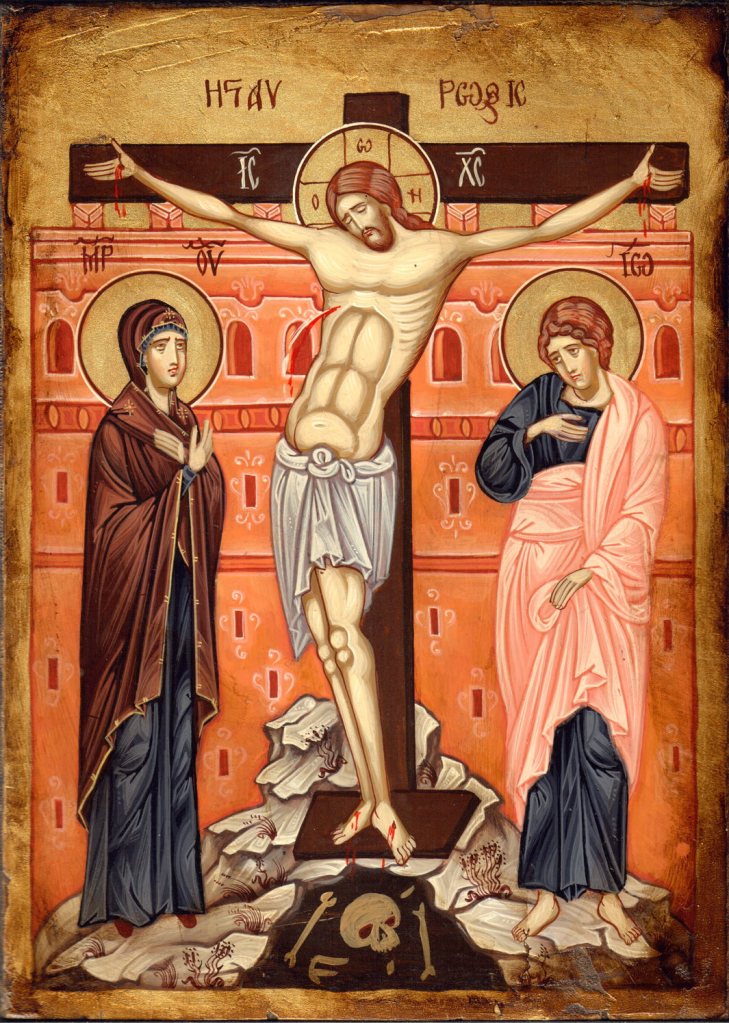
The idea that a person is unlovable goes back to the feeling that in order to be lovable we have to do and say the right things. Though it may be difficult sometimes for other people to love us, for God it is effortless. This is the beauty of the Gospel. God loves you; He loves me; He loves everyone. If you doubt that, you have only to look to the One who laid His life down for you on the cross–Jesus Christ, the Son of God who is fully God and fully man. He is the real, tangible proof that you are indeed lovable.

For God so loved the world that he gave his only Son, so that everyone who believes in him might not perish but might have eternal life. (John 3:16)


Be Still

“Be still and know that I am God!” (Ps. 46:10a)

People often think that “be still” in this verse means, “be quiet,” but it actually means “sink down, relax, let drop, or let go” (H7503).

On the night Christ was betrayed, He prayed in the Garden of Gethsemane (Olive Pressing):

“Father, if you are willing, take this cup away from me; still, not my will but yours be done… He was in such agony and he prayed so fervently that his sweat became like drops of blood falling on the ground. ” (Luke 22:42,44)

In His humanness, Christ struggled with letting go of His own will, so much so that His sweat became as drops of blood. He humbled Himself, and acquiesced to His Father’s will even to the point of death.

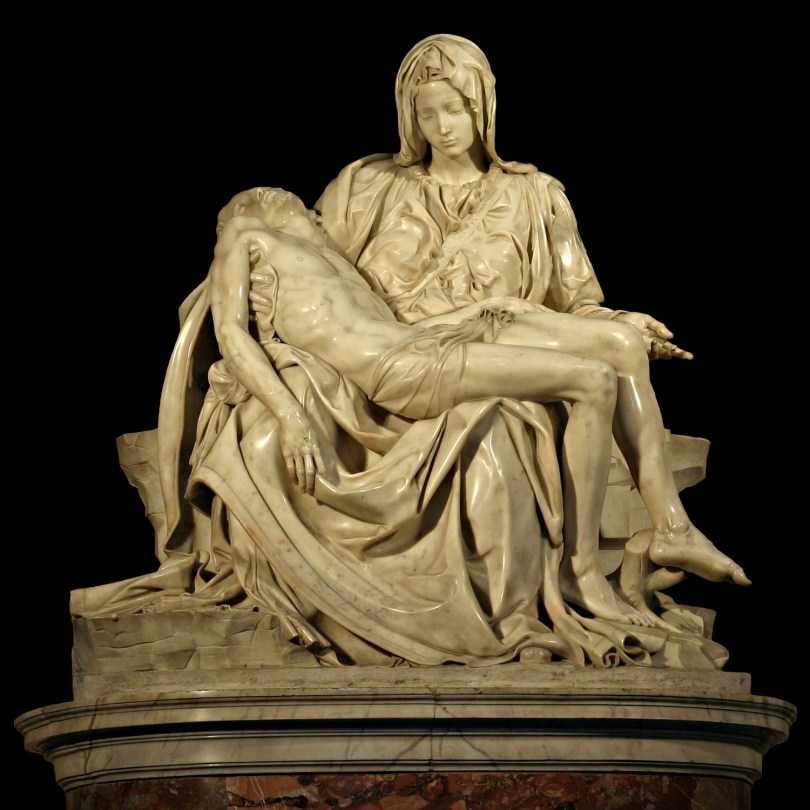
La Pietà by Michelangelo is a masterpiece revealing the beauty of the human form and evoking emotion from the onlooker. For me, it embodies the idea of letting go or surrender. In dying, Christ shows His complete surrender to the will of His Father. Yes, He died, but three days later, He rose from the dead, conquering death and the grave. In letting go, in being humble, He is raised up to the highest place of honor in His Father’s Kingdom.

Humble yourselves before the Lord and he will exalt you. James 4:10

Many people struggle with wanting their own way. We think that if we can control our lives, we can avoid pain, discomfort, annoyance, and other kinds of suffering. But this simply is not true. We can’t control what happens to us. We can only control how we confront what happens to us.

For whoever wishes to save his life will lose it, but whoever loses his life for my sake will save it. (Luke 9:24)

We cannot escape suffering. What we can do is let go of our need to try to control and put our trust in a God Who is good, Who loves us, and Who desires the best for us. We can surrender to His will because He is faithful, He is trustworthy.

For if we have grown into union with him through a death like his, we shall also be united with him in the resurrection. (Romans 6:5)

Even though we are destined to die, He has the power to raise us up again. We have hope that the death we die, whether physically or even psychologically, it is not the end; resurrection is coming.

Beauty Even in Small Things

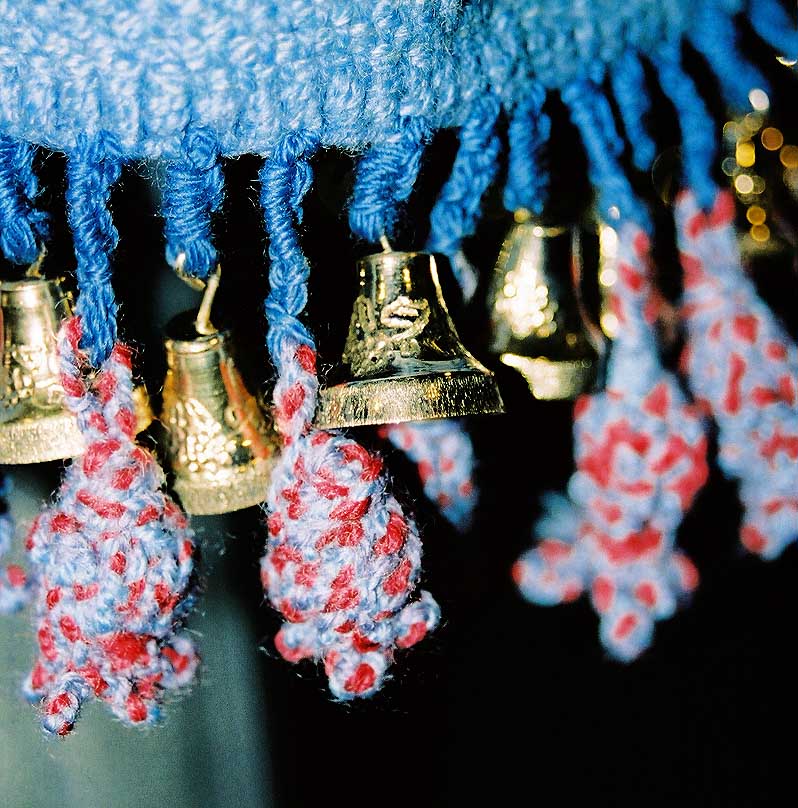
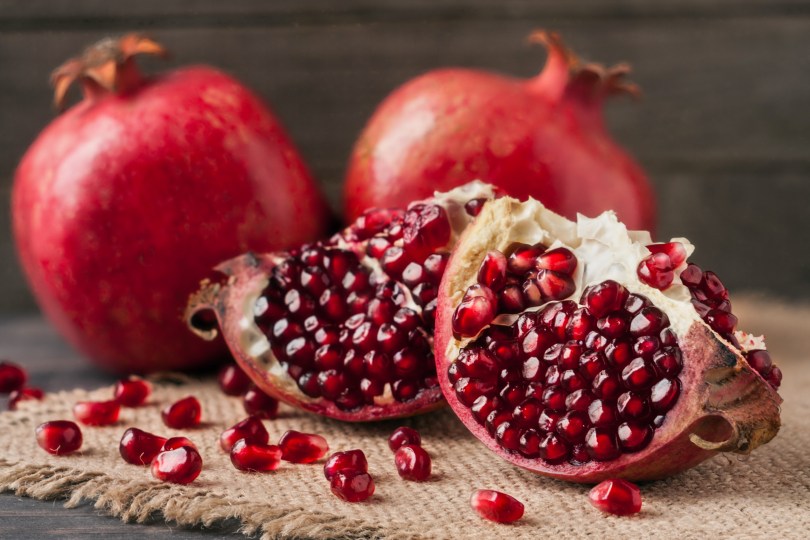
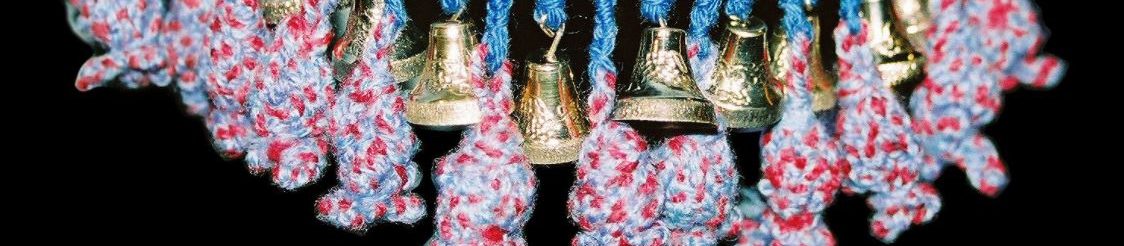
“The Lord was specific even about small details. Around the hem of the priests’ garments there were to be embroidered pomegranates of purple, blue, and red, interspersed with golden bells: “a golden bell and a pomegranate, a golden bell and a pomegranate, round about on the skirts of the robe” (Exod. 28:34). Even though the children of Israel were refugees, wandering in the desert and living in tents, God commanded Moses to use extravagant resources to make worship beautiful. All of it portable, too, so that an impoverished people could carry that beauty with them, as they crossed and recrossed the desert over the course of four decades.
Beauty must mean something. God must know something about how beauty works on the human heart. He must have made us that way.”

~Frederica Matthewes-Green