Walk with the Lamb

Pick the thing you would want to learn to do the most. The thing that makes your heart soar, that thing that when you do it you lose all track of time. Now imagine the person you admire the most in the world and aspire to be like offers to teach you everything they know. Would you turn them down? Would you instead buy the book he or she wrote and try to work out all the diagrams, directions, and terminology all on your own?

But so often, this is what we do to God. He came in the flesh. He died on the cross. He rose from the dead, and He sent His Spirit to come and dwell inside of us. But what do we do? Instead we read histories, anthropology, theology, and commentaries. We listen to teachers and biblical scholars to help us understand how to do everything better, to figure out the formula to be right with God. We keep diets, and feast days, and fast days. We try so hard to not get angry, to not sin, and to not hate others. And so often we fail. These are all works of the flesh.

We have direct access to the King of Kings, His Spirit is coursing through our bodies giving us Life, but we ignore Him, because we are still caught in shame and guilt; we are still believing the lie that we can do something to earn God’s love.

He’s done it all. He has gone before us. He has finished the work necessary for our salvation. He has opened the doors to Paradise. He is calling us into Freedom. All we have to do is say, “YES!”

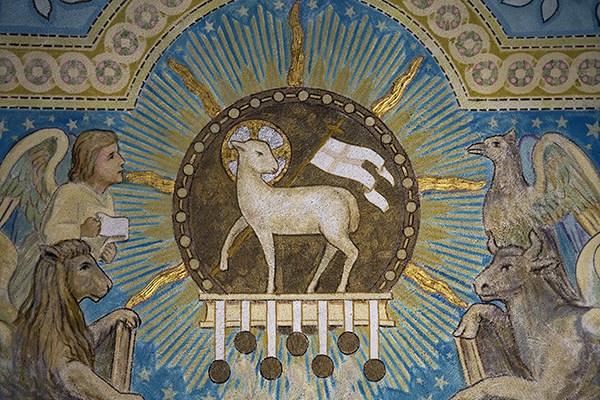
Then I looked, and behold, on Mount Zion stood the Lamb, and with him 144,000 who had his name and his Father’s name written on their foreheads. And I heard a voice from heaven like the roar of many waters and like the sound of loud thunder. The voice I heard was like the sound of harpists playing on their harps, and they were singing a new song before the throne and before the four living creatures and before the elders. No one could learn that song except the 144,000 who had been redeemed from the earth. It is these who have not defiled themselves with women, for they are virgins. It is these who follow the Lamb wherever he goes. These have been redeemed from mankind as firstfruits for God and the Lamb, and in their mouth no lie was found, for they are blameless.

Rev. 14:1-5
Straw

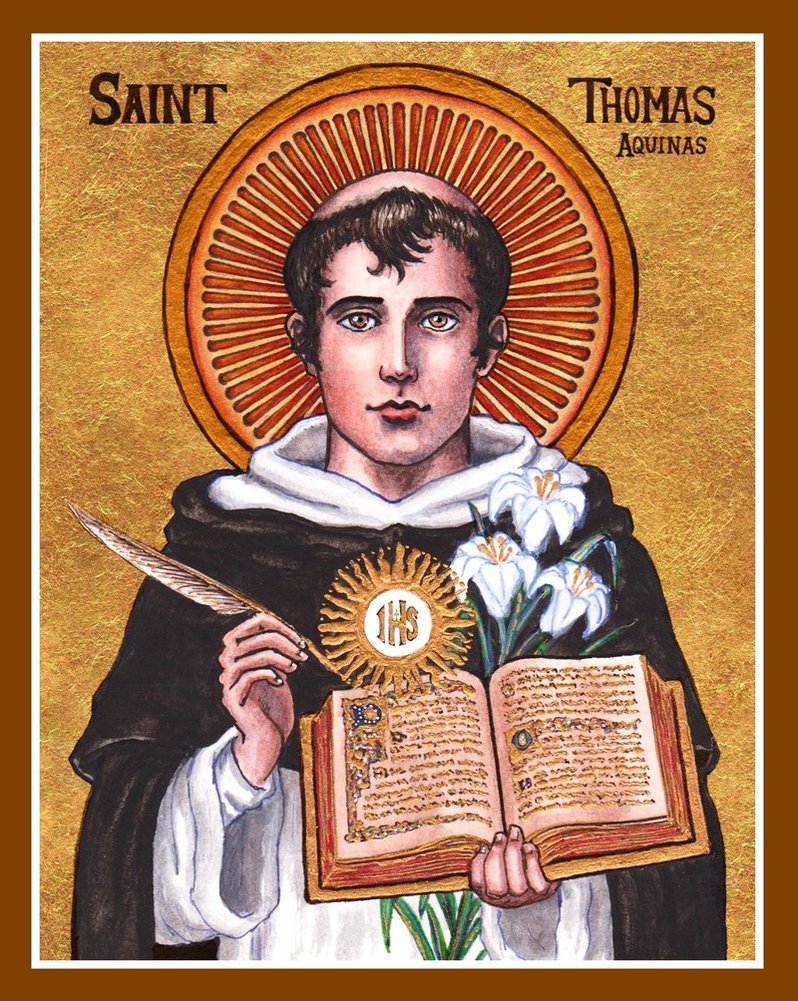
At the end of his life, St. Thomas Aquinas had what some believe was a beatific vision and stopped short of completing his work entitled the Summa Theoligiae.

“The end of my labors is come. All that I have written appears to be as so much straw after the things that have been revealed to me.”

St. Thomas Aquinas

Consider the verses from 1 Corinthians 3:10-15.

According to the grace of God given to me, like a skilledmaster builder I laid a foundation, and someone else is building upon it. Let each one take care how he builds upon it. For no one can lay a foundation other than that which is laid, which is Jesus Christ. Now if anyone builds on the foundation with gold, silver, precious stones, wood, hay, straw— each one’s work will become manifest, for the Day will disclose it, because it will be revealed by fire, and the fire will test what sort of work each one has done. If the work that anyone has built on the foundation survives, he will receive a reward. If anyone’s work is burned up, he will suffer loss, though he himself will be saved, but only as through fire.

Arguably one of the world’s most brilliant minds, a theologian and a philosopher, St. Thomas Aquinas made it his life’s work to try to prove the existence of God and make the case for Christ. Why then would he say that his life’s work was straw? If we are to take the words of the Apostle Paul seriously then we may conclude that the work of the Summa Theologiae was of St. Thomas’ own hands. He saw it clearly as a work of the flesh and not the Spirit. He knew his words would not survive the fire of purification.

The wisdom of God is foolishness to this world and the wisdom of this world is foolishness to God. There is only so far a person can go on the logic and reason of the human mind. We must see the spiritual with spiritual eyes and put on the mind of Christ. Our own human understanding cannot comprehend the light that the Word provides.

Though St. Thomas Aquinas considered his work straw, the Catholic church went on to use his last work in the at the council of Trent during the counter-reformation. I wonder what the church would have become if they had not adopted a worldy interpretation of Scripture. Maybe one day soon, we’ll see what the Church can be when she submits to and walks in the Spirit.